MWAC Cleaning Solutions
Find Brampton commercial cleaning and sanitation experts who align with CSA, WHMIS, and Peel Public Health. You'll receive SOPs, SDS access, batch/lot traceability, accurate solution measurements, and documented verification. We validate disinfection with ATP/fluorescence, guarantee dwell times, and utilize ECOLOGO/Green Seal, DIN/EPA-registered chemistries. Crews work off-peak with security protocols, color-coded tools, and chain-of-custody for disinfectants. Traceable records, CAPA workflows, and specialized protocols (office, retail, healthcare, industrial) are included. See how we minimize interference while improving standards.
Key Takeaways
- Comprehensive SOPs following CSA, WHMIS, and Peel Public Health guidelines with fully auditable documentation featuring SDS libraries, lot tracking, and timestamped service records.
- Risk-based sanitation protocol: featuring touchpoint identification and mapping, EPA-registered cleaning solutions, validated contact duration, ATP and fluorescence testing, and periodic third‑party microbiological analysis.
- Operational precision: implementing after-hours operations, micro-crews, security protocols, secure tracking for chemicals, and calibrated dispensing with equipment documentation.
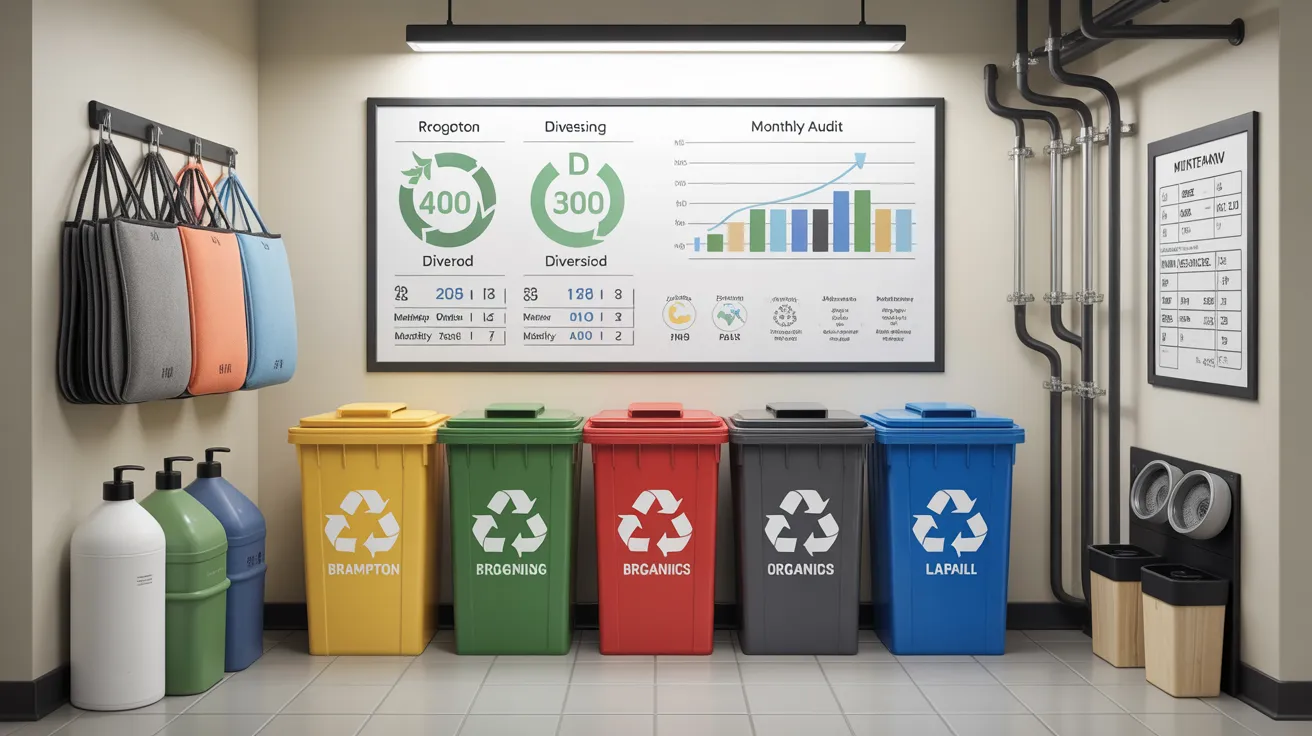
- Environmental stewardship: ECOLOGO and Green Seal certified products, closed-loop dilution systems, microfiber cleaning systems, detailed waste assessments, and ISO 14001-based diversion metrics.
- Extensive quality assurance incorporating oversight checks, CAPA workflows, training documentation, and compliance documentation tailored for Brampton bylaws, insurance requirements, and regulatory standards.
Why Professional Cleaning Matters for Brampton Businesses
Though daily maintenance keeps areas presentable, commercial cleaning guarantees your Brampton property adheres to health, safety, and regulatory requirements. You need established protocols that align with local requirements, validated cleaning solutions, and properly calibrated equipment to reduce risk exposure and contamination. Certified specialists utilize proven operational procedures, color-coded equipment, and controlled contact duration to verify complete sanitization and residue cleanup without damaging surfaces.
You'll benefit from detailed evaluations that analyze traffic patterns, touchpoints, and HVAC impacts, then determine specific intervals and quality assurance protocols. Weather-related aspects are important: winter conditions require doorway washing and matting upkeep; hot weather demands humidity management and mold mitigation; transitional seasons introduce pollen and debris that necessitate enhanced filtration and high-dusting. Detailed records, safety data sheet access, and disposal protocols streamline audits and prove compliance.
Markets Served: Offices, Retail, Healthcare, and Industrial
Your facility demands sanitation procedures that comply with office and retail requirements-high-contact surface sanitization, flooring maintenance schedules, and waste management protocols-while following local health and safety bylaws. For healthcare, you need CSA- and IPAC-compliant procedures, EPA-approved sanitizing agents, verified contact duration, and tracking documentation for biohazard handling. In industrial settings, you expect WHMIS/GHS labeling, equipment isolation protocols, particulate filtration systems, and documented standard operating procedures.
Business and Retail Guidelines
When operations span across various facilities from offices to retail spaces, healthcare centers, and industrial locations, cleaning standards must conform to industry-specific requirements and measurable quality standards. Within get more info office and retail spaces, you'll need to document frequency, method, and verification for each zone. Utilize floor plans to chart traffic intensity, touchpoints, and material sensitivities, before arranging tasks based on risk categories. Specify appropriate cleaning agents, mixing proportions, and contact duration; document SDS access and dispenser calibration.
Establish employee protocols for: proper glove usage between areas, wire control, silent operation protocols, and warning displays for accident avoidance. Set up a color-specific protocol for tools to prevent cross-contamination in restrooms, break rooms, and public spaces. Schedule regular HEPA filtration, microfiber system updates, and disposal segregation. Verify results using biological monitoring, detailed logs, and remediation processes linked to inspection standards and customer SLAs.
Industrial and Healthcare Standards
Given that healthcare and industrial settings possess increased risk profiles, we utilize validated protocols that conform to regulations and pass audit scrutiny. You get site-specific SOPs aligned with CSA, Public Health Ontario, and OSHA/WHMIS guidelines. We implement color-coded tools, closed-loop chemical dilution, and barcode-logged procedures to secure traceability, infection control, and contamination avoidance.
In our clinical settings, we follow Spaulding classifications, perform terminal cleaning, and use EPA-registered disinfectants with specified wet contact times. We verify results through ATP verification and comprehensive audit checklists. Designated sharps zones maintain puncture-resistant waste management and comprehensive chain-of-custody tracking.
Across industrial areas, we handle LOTO coordination, dust hazard mitigation, and safe tool deployment. Floor surfaces receive degreasing treatment with friction coefficient validation. We perform meter calibration, oversee SDS libraries, deliver hazard communication instruction, and produce compliance reports meeting your audit protocols and insurer requirements.
Advanced Disinfection Protocols for Frequently Contacted Surfaces
While standard cleaning clears visible debris, advanced disinfection protocols address microbial populations on high-touch surfaces with proven, measurable methods. You'll begin with touchpoint mapping to inventory shared equipment, door fixtures, handrails, light switches, faucets, elevator controls, and payment terminals. Establish risk categories, define dwell times per EPA-registered disinfectant, and record material compatibility to minimize surface damage. Standardize sequence: pre-clean, apply, maintain wet contact, and verify.
Utilize electrostatic application for uniform coverage of intricate shapes; calibrate dispensers, verify droplet size, and control pass speed. Perform rapid hygiene monitoring or fluorescent indicators for immediate process verification, and schedule periodic independent microbial sampling for results verification. Instruct staff on safety equipment protocols, product documentation review, and inventory control. Document lot identifiers, chronological data, and personnel codes for quality verification and incident traceability.
Sustainable Products and Environmental Practices
You'll select environmentally-friendly cleaning agents that comply with ECOLOGO or Green Seal standards and align with WHMIS and SDS protocols. You'll establish waste reduction strategies, incorporating microfiber systems, dilution monitoring, reusable dispenser options, and source-separated recycling following Brampton and Ontario guidelines. You'll verify performance with VOC restrictions, biodegradability criteria, and regular assessments to track compliance and ongoing improvement.
Green-Certified Cleaning Products
Set a stricter compliance standard by specifying eco-certified cleaning agents that satisfy respected standards such as ECOLOGO (UL 2792/2795), Green Seal (GS-37/GS-53), or EPA Safer Choice. In your environmental certifications overview, list the product identifier, certification ID, dilution ratios, pH range, VOC content, and SDS references. Ensure third-party certifications on product containers and verify listings in each certification body's online registry.
Select cleaning products designed for microfiber, autoscrubbers, and touchpoint protocols. Choose surface-active compounds with rapid biodegradation, non-NPE formations, and low-aquatic-toxicity ratings. Set residue limits to support allergy prevention on high-traffic surfaces and in air quality-sensitive areas. Standardize controlled dispensing systems to avoid excess use and maintain ppm accuracy. Train staff on contact duration for sanitizing options approved under Safer Choice's partner criteria. Perform three-month assessments, check surface deposits, and document variances with corrective actions.
Effective Waste Management Approaches
While adhering to strict hygiene standards, establish waste reduction by setting up reusable, repairable, and refillable systems across sites. Begin by conducting Waste audits to quantify material streams by weight, contamination rate, and disposal cost per department. Use findings to specify durable dispensers, bulk chemical concentrates, microfiber systems with tracked laundering and color-designated containers. Require vendor take-back for packaging and pallet recovery.
Implement compost programs for food waste from kitchens and break areas, verifying that disposal liners conform to ASTM D6400 and haulers approve their use. Calibrate collection timing using bin fill-level measurements to prevent overflow issues and pest problems. Provide staff training with standard operating procedures, clear signage, and regular training sessions. Monitor performance metrics: waste diversion rates, per-capita disposal, and procedural violations. Record procedures to satisfy local regulations and ISO 14001 criteria.
Flexible Scheduling to Minimize Downtime
In line with business operations, customizable scheduling guarantees cleaning is conducted outside peak hours to eliminate business interruptions and profit impact. You determine designated cleaning periods, enhanced through after-hours coordination, so crews can work when business activity is minimal. We assess your operating calendar, exclusion windows, and statutory holidays, then align work procedures to eliminate overlap with incoming goods, reviews, and repairs.
To minimize disruption, we implement rotating crews and dedicated units with position-based guidelines, time-tracked assignments, and performance thresholds. Personnel maintain noise, odor, and illumination restrictions, and work with rapid-cure solutions to minimize waiting periods. Entry control, asset monitoring, and record-keeping processes guarantee compliance. We meticulously record operational metrics, exception handling, and incident documentation to meet compliance requirements, labor agreements, and municipal requirements while preserving efficiency.
Understanding Deep Cleaning and Routine Maintenance: Essential Guide
Since compliance standards and operational risks vary based on specific tasks, you need a clear distinction between routine maintenance (daily and weekly sanitation to preserve sanitation levels) and deep cleaning (periodic invasive treatment that resets difficult-to-access and priority zones). You must delegate daily upkeep to high-touch surfaces, restrooms, ground surfaces, and common tools using approved cleaning agents, microfiber tools, and contact-time certified disinfectants. You must record timing, PPE, techniques, and inspection findings.
Schedule deep cleaning as scheduled maintenance guided by hazard mapping: critical areas including ceilings, HVAC systems, grout lines, equipment spaces, drains, and porous surfaces. Apply bioluminescence or UV markers to confirm before and after outcomes, transition to HEPA vacuums, descaling agents, and steam where biofilm risk exists. Standardize standard procedures, color systems, and equipment separation to prevent cross-contamination. Record observations, remedial measures, and follow-up schedules to preserve cleanliness.
Health and Safety Standards Compliance
Your cleaning protocol can only succeed if it aligns with statutory and industry requirements, so anchor every task to specific standards and record proof of conformity. Map each surface, chemical, and method to industry standards and regulatory requirements. Maintain SDS libraries, dilution logs, lot tracking, and measurement verification logs. Train staff on PPE selection, donning/doffing, and exposure response. Implement color-coded tools and closed-loop chemical systems to avoid cross-contamination. Arrange internal audits, keep checklists, photos, and corrective actions to maintain inspection readiness. Track regulatory updates from Peel Public Health and provincial authorities; update SOPs, signage, and risk assessments accordingly. Confirm disinfectant contact times with ATP testing and log results. Manage access to storage, identify secondary containers, and perform ventilation checks with documented maintenance.
Specialized Services for Post-Event and High-Traffic Requirements
Despite compressed maintenance timeframes during peak periods, your facility needs rapid, guideline-driven cleaning solutions that restores sanitary conditions without impacting daily operations. You receive specialized crowd management protocols that strategically segment spaces, assess contamination levels, and utilize quick-acting formulations tested according to ASTM and Health Canada guidelines. Our team conducts thorough disinfection of high-contact surfaces like rails, seats, and concessions applying DIN-registered products with verified contact times.
For floors, we utilize non-slip detergents, auto-scrub paths, and microfiber cleaning processes to reduce re-soiling. Waste management is conducted per municipal bylaw, with hazardous materials, glassware, and organic waste handled via marked receptacles and tracking. After-event odor management employs source removal, enzymatic digesters, and MERV 13-18 air filtration to reset IAQ benchmarks. Bathroom maintenance encompasses scale elimination, grout disinfection, and restocking according to occupancy projections.
Expert Personnel and Quality Control Standards
These operational procedures only function when certified professionals carry out them under a documented QA framework. You depend on trained technicians who comply with SOPs mapped to CSA, WHMIS, and manufacturer guidelines. Each technician performs primary and recurring skill evaluation on chemical compatibility, dwell times, microfiber sequencing, and ATP verification. You enforce chain-of-custody logs for disinfectants, calibrated meters, and color-designated area controls to eliminate cross-contamination.
Your quality control process follows a closed-loop approach. Team leaders execute comprehensive audits with established protocols, monitoring critical contact points with ATP analysis and visual assessments. Compliance gaps generate remedial responses, systematic problem investigation, and skill enhancement. Service verification includes time documentation, including photographic evidence maintained in regulatory archives for trend analysis and review. Three-month emergency exercises, safety gear fitting assessments, and competency update sessions keep skills fresh and objectively assessed.
Selecting the Perfect Cleaning Service in Brampton
When selecting a Brampton cleaning partner, look beyond price and evaluate verifiable compliance, personnel management, and control measures. Validate workplace safety insurance and insurance coverage limits, along with industry certifications (such as ISSA, GBAC). Request operational protocols, cleaning product lists with SDS, and equipment maintenance records. Verify security clearance checks, vaccine protocols where required, and appropriate supervision levels. Verify certified education on WHMIS, exposure control procedures, and municipal requirements, including waste handling and sharps handling procedures.
Evaluate quality control systems including periodic assessments, environmental monitoring protocols, and corrective action procedures with recorded corrective actions. Require KPI reporting (service intervals, defect rates) and problem resolution procedures. Balance scope with financial constraints through scheduled timeframes, activity plans, and service level agreements. Verify environmental compliance proof and air handling requirements. Insist on backup procedures for health incidents, resource shortages, and facility security measures.
Frequently Asked Questions
What Are Typical Contract Lengths and Cancellation Policies for Cleaning Services?
Cleaning service agreements typically operate on month-to-month, 6-month, or 12-month terms. The agreements specify specifications for scope, KPIs, renewal options, and rate changes. Contract termination clauses usually require thirty to sixty days' notification for general contract ending, while instant contract cancellation can occur with major concerns such as safety violations, expired insurance, or service failures. Premature cancellation usually requires cancellation charges. Verify that notice procedures (mail or email), cure periods (5-15 days), and financial settlement terms are properly outlined to maintain compliance.
Do You Offer Emergency Spill or Biohazard Response Outside Business Hours?
Absolutely - we provide after hours services for hazardous material incidents. Just like an emergency signal breaking through darkness, you'll get a fast dispatch team within 60-90 minutes. Our team comes in safety gear, set up biohazard containment, isolate HVAC if required, and comply with OSHA, WHMIS, and local public health protocols. We maintain chain-of-custody for waste, perform ATP verification, and deliver incident reports. Just give phone authorization; we respond right away and bill under emergency service rates.
How Are Staff Vetted, Background-Checked, and Insured for On-Site Work?
You get thoroughly vetted using an extensive screening procedure. We run complete national and local criminal checks, verify identity, and ensure right-to-work status. We collect two professional references while we validate employment history and performance. Drug tests are administered as required by client SOPs. All technicians undergo required safety training, WHMIS/OSHA certification, bloodborne pathogens certification, and site-specific instruction. We conduct annual background re-checks for all staff members. All personnel maintain general liability, pollution, and workers' compensation protection; insurance certificates and endorsements are supplied upon request.
Can Services Integrate With Building Access Control and Security Protocols?
Yes. You can align operations with your building's security and access control systems through established integration procedures and comprehensive credential management. You'll set up duration-specific credentials, access-level authorizations, and geographic access limits. We'll facilitate system integrations via API or OSDP, audit-log syncing, and visitor access protocols. You'll implement two-factor verification, minimal access rights standards, and user verification and provisioning. We'll document standard operating procedures, security incident handling, and immediately deactivate permissions upon scope changes. You'll get compliance documentation and unauthorized access warnings.
What Reporting Tools and Dashboards Monitor Cleaning Tasks and Service Quality?
A comprehensive KPIs dashboard and mobile logging system delivers detailed, dependable compliance oversight. The system displays live status information, including geotagged entries, time records and adherence to service agreements. You can sort reports based on location, time period, and personnel and create thorough documentation. The platform enables monitoring of resource utilization and adherence monitoring. Data protection is guaranteed with user-specific permissions and enterprise-grade encryption, while API integration enables comprehensive business intelligence analysis.
Wrapping Up
You're not simply employing cleaning staff-you're commissioning a meticulous enhancement for your facility's health. With precision sanitization for high-touch zones, eco-certified chemistries, and inspection-ready records, you'll meet standards like a metronome. Adaptable timing keeps operations humming, while post-event surge services eliminate event remnants. Trained techs, checklists, and quality assurance checks ensure reliability. Select a Brampton provider that demonstrates adherence, confirms outcomes, and adapts to your needs-so your space operates like a professional environment, sanitized, secure, and compliant.